

Blog
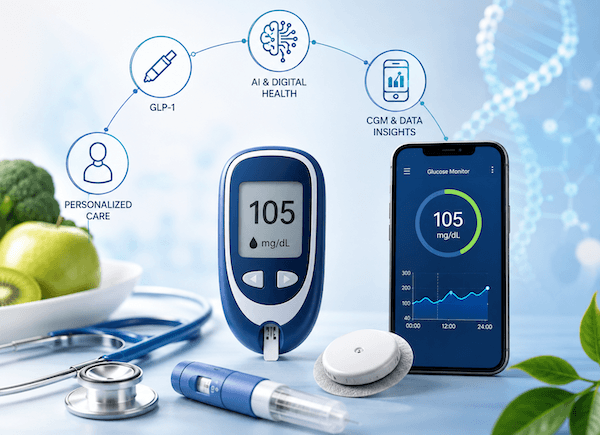
The Future of Diabetes Care: GLP-1 Therapies, CGM, AI and Personalized Medicine
Diabetes management is entering a new era. Advances in medications, continuous glucose monitoring, artificial intelligence, digital health, nutrition, and personalized medicine are changing how healthcare professionals prevent, diagnose, monitor, and treat diabetes.
For decades, diabetes care has largely focused on controlling blood glucose. Today, the approach is becoming much broader: improving metabolic health, reducing cardiovascular and kidney risks, managing obesity, preventing complications, and delivering treatment tailored to each individual.
So, what does the future of diabetes care look like?
GLP-1 Therapies: Beyond Blood Glucose Control
One of the most significant developments in diabetes and obesity management has been the increasing use of GLP-1 receptor agonists and dual GIP/GLP-1 therapies.
Medications such as semaglutide and tirzepatide have expanded the possibilities for managing both glucose and body weight. The 2026 American Diabetes Association Standards of Care recommend prioritizing glucose-lowering medications with beneficial effects on weight in appropriate people with type 2 diabetes and overweight or obesity.
The importance of these therapies extends beyond weight loss. Depending on the individual and treatment, benefits may include improvements in glycemic control and cardiometabolic risk, while certain therapies have demonstrated cardiovascular, kidney, or liver-related benefits in appropriate populations.
However, medication is only one component of comprehensive diabetes care. Treatment selection should consider individual goals, comorbidities, tolerability, access, and long-term adherence.
Continuous Glucose Monitoring Is Changing Diabetes Management
Continuous glucose monitoring (CGM) has transformed the way glucose levels are monitored.
Instead of relying solely on occasional blood glucose measurements, CGM provides information about glucose patterns throughout the day and night. This can help healthcare professionals and patients understand:
- Time in range
- Glucose variability
- Hyperglycemic patterns
- Hypoglycemic episodes
- The impact of meals and physical activity
- Responses to medications and insulin
The 2026 ADA Standards of Care recognize CGM as an important component of diabetes technology and recommend its use in appropriate people with diabetes, with technology selection individualized according to clinical needs, preferences, resources, and ability to use the device.
The next stage is the increasing integration of CGM with automated insulin delivery systems and connected digital platforms, creating increasingly sophisticated approaches to diabetes self-management.
Artificial Intelligence and Digital Health
Artificial intelligence is also becoming an important area of diabetes research and care.
AI-based systems may help analyze large volumes of health data, identify patterns, support risk prediction, assist clinical decision-making, and personalize diabetes management.
Potential applications include:
- Predicting glucose trends
- Identifying patients at higher risk of complications
- Supporting personalized treatment decisions
- Interpreting continuous glucose data
- Digital coaching and patient education
- Remote monitoring
- Integrating information from multiple health technologies
However, technology should complement—not replace—clinical expertise. The 2026 ADA Standards emphasize that diabetes technology must be appropriately selected, supported, and accompanied by education and training.
Personalized Diabetes Care
There is no single diabetes treatment strategy that works equally well for every patient.
The future of diabetes management is therefore moving toward personalized care.
Treatment decisions increasingly need to consider:
- Age and lifestyle
- Weight and metabolic health
- Cardiovascular risk
- Kidney function
- Liver health
- Hypoglycemia risk
- Dietary preferences
- Physical activity
- Treatment access and affordability
- Patient preferences and goals
For example, treatment choices can differ considerably between a person with type 2 diabetes and obesity, a patient with established cardiovascular disease, and an individual with chronic kidney disease.
This movement toward individualized treatment represents an important shift from simply asking “How do we lower glucose?” to asking “What treatment strategy will provide the greatest overall health benefit for this individual?”
Diabetes, Obesity and Metabolic Health Are Increasingly Connected
Diabetes and obesity cannot always be considered separate conditions.
Weight management has become an important part of diabetes prevention and treatment. The 2026 ADA Standards note that meaningful weight loss can improve glycemia and reduce the need for glucose-lowering medications, while greater weight loss may contribute to diabetes remission in some individuals.
Comprehensive management may involve:
Nutrition + Physical Activity + Behavioral Support + Pharmacotherapy + Diabetes Technology + Metabolic Surgery when appropriate
This multidisciplinary approach is increasingly important for achieving sustainable improvements in metabolic health.
The Growing Role of Nutrition and Lifestyle
Despite rapid advances in medications and technology, nutrition and lifestyle remain fundamental components of diabetes care.
The 2026 ADA Standards recommend individualized medical nutrition therapy and emphasize dietary patterns that support metabolic goals, including nutrient-rich foods while limiting sugar-sweetened beverages, sweets, refined grains, and highly processed foods.
The future is therefore unlikely to be about choosing between medication, technology, or lifestyle interventions. Instead, successful diabetes care will increasingly involve integrating these approaches around the needs of each patient.
What Does the Future Hold?
The next generation of diabetes care will likely be characterized by:
Earlier intervention.
Identifying people at high risk and intervening before complications develop.
Smarter technology.
Using CGM, automated insulin delivery, connected devices, and digital platforms more effectively.
Personalized treatment.
Matching therapies to individual metabolic, cardiovascular, kidney, liver, lifestyle, and patient-centered needs.
Integrated obesity and diabetes care.
Treating excess weight and metabolic disease as interconnected conditions.
Greater use of data and AI.
Turning increasingly large amounts of health data into clinically useful information.
Multidisciplinary collaboration.
Bringing endocrinologists, diabetologists, primary care physicians, dietitians, diabetes educators, pharmacists, surgeons, technology specialists, and researchers together.
Conclusion
Diabetes care is moving beyond traditional glucose-centered management toward a more comprehensive, personalized, technology-enabled model of metabolic health.
GLP-1-based therapies, continuous glucose monitoring, artificial intelligence, digital health, personalized nutrition, and multidisciplinary care are creating new opportunities—but also new challenges—for healthcare professionals.
The future will not simply be about having more treatments. It will be about choosing the right combination of interventions for the right patient at the right time.
As research continues to evolve, continued education, collaboration, and knowledge exchange among diabetes and metabolic disease professionals will be essential to translating these advances into better patient outcomes.
This article is intended for healthcare professionals and educational purposes. Treatment decisions should be based on individual patient circumstances and current clinical guidelines.